Daily Doses of Art for November 10
I’m beginning again this morning with my Daily Doses of Art. And I’m beginning again with daily entries.
I haven’t shared anything here for four months because I was super focused on launching Spiritual Direction for Writers: Everyday Rituals for Your Writing Life. But I never stopped putting myself in the way of art.
I’m returning to this practice of recording my doses of art as a way to reflect a bit more on the art I behold, keep track all of the wonderful art I behold, and remember all of the goodness art bestows on me.
We’ll see how it goes. If I have to stop at some point I can always begin again.
A work of visual art I’m beholding today is this collage by Lee Krasner
This is the cover of a folded announcement card for the opening of Lee Krasner’s “Collages 1939 – 1984” at Robert Miller Gallery, that occurred on Tuesday October 7, 1986. I bought it on ebay last year. Maybe? I don’t remember. But I’m glad I have it.
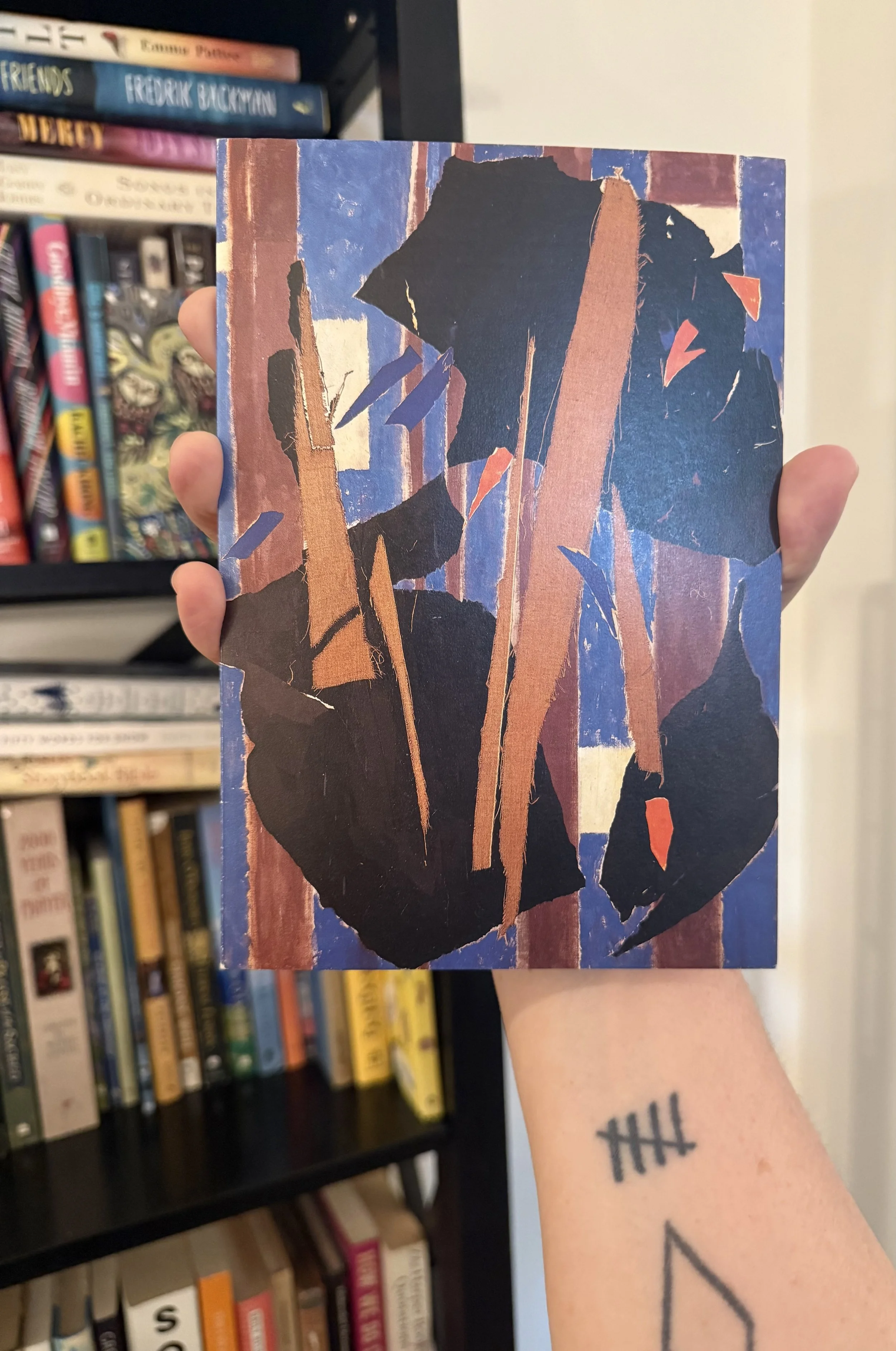
Lee Krasner, Blue Level, 1955, oil and collage on canvas
I adore Krasner’s art. Her collages are fantastic, and I was delighted to see some last month at Krasner and Pollock: Past Continuous at the Met. Here’s a photo I took of one of her collages while viewing this exhibition. Obsessed.
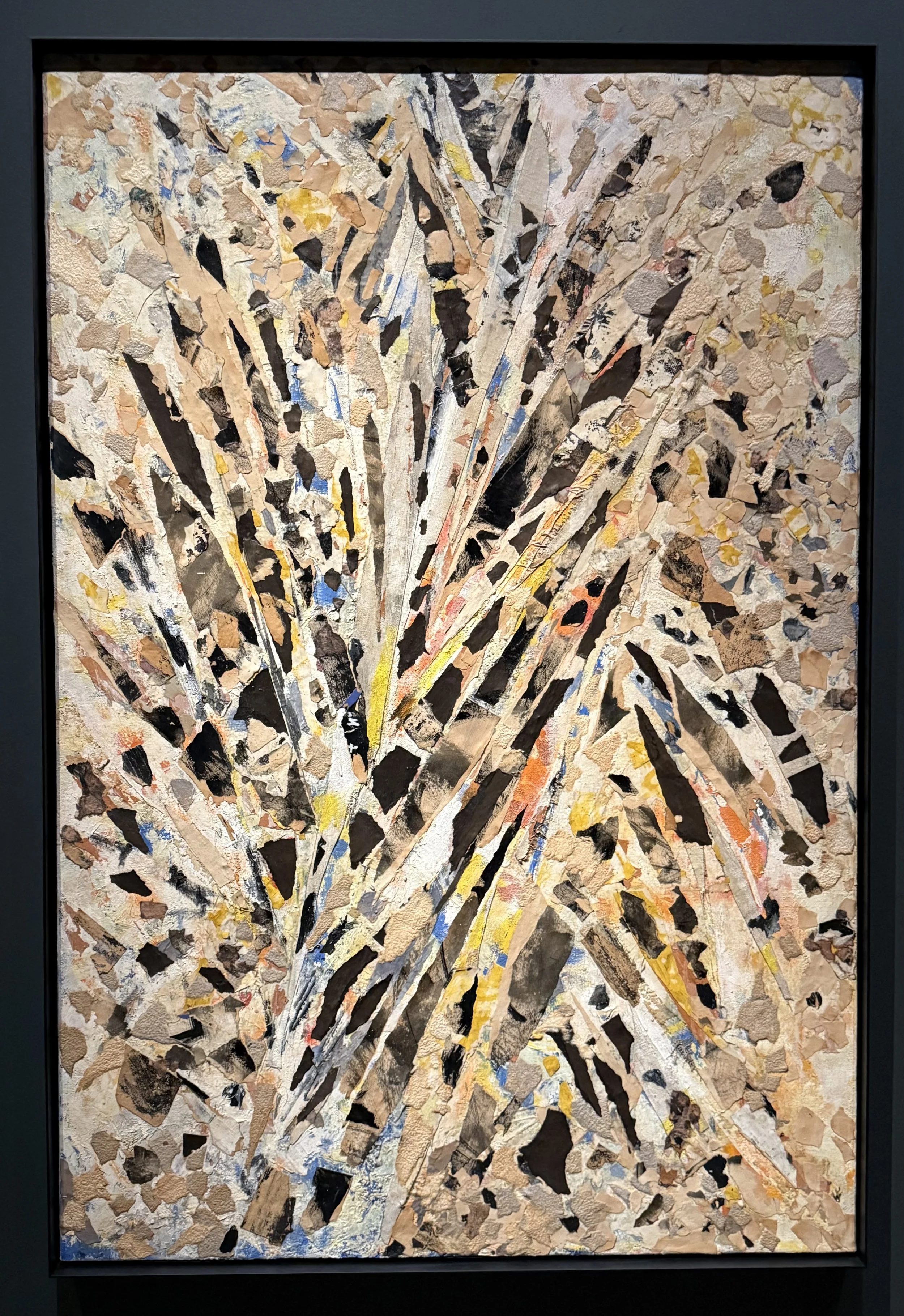
Lee Krasner, Burning Candles, 1955, Oil, paper, and canvas on linen
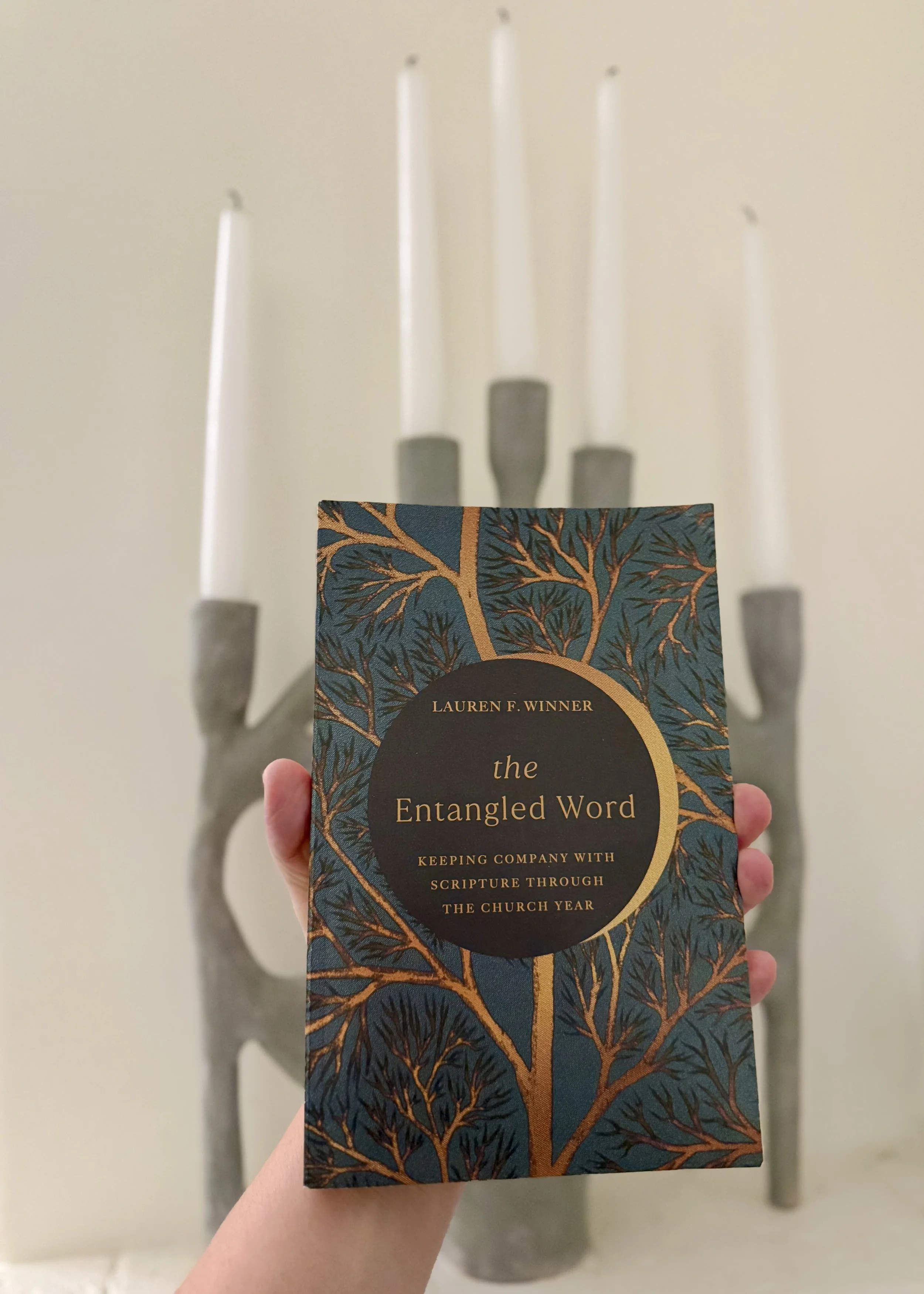
I’m also continuing to read Lauren Winner’s new book, The Entangled Word: Keeping Company with Scripture Through the Church Year. Today is the publication date for this book, so you can buy it and read it too!
Here’s a quote from one of the early chapters, “Keeping Time with the Church Year”:
The church year directs our attention and trains our loves by returning us to the same mysteries again and again. As the nineteenth-century Benedictine Prosper Guéranger puts it, each year, the church “sees him as Infant in the manger, fasting in the desert, offering Himself on the cross, rising from the grave, founding his church, instituting the Sacraments, ascending to the right hand of his Father, and sending the Holy Spirit” to us. Each year, the calendar places those mysteries before the church anew. And, as Guéranger writes, “what the liturgical year does for the church at large, it does also for the soul of each one of the faithful.” In other words, what the church enacts together over time is also offered to each of us, so that the year does not pass over us as a public drama but takes hold in our particular lives.
We repeat the church’s annual rhythms, but repetition is never identical: We are changed by what we have already lived, and so the mysteries meet us differently each time. Guéranger suggests that each year’s reprise reveals how partial our earlier apprehensions of Jesus had been. “The pageant of Easter makes us so glad, that our former Easters appear to have been only half kept. The triumphant ascension discloses to us upon the whole economy of the Incarnation secrets which we never knew before this year. When the Holy Ghost comes down at Pentecost, is it not the case that we so thrill with the renewal of the great Presence that our emotions of last [Pentecost] seem too tame for this?” What changes each year is not the story but our capacity to be addressed by it, so that the same feasts come back to us with greater weight, greater insistence. Jesus returns, and returns again, to invite more of our lives into His keeping.
If you’re a Christian who cares about the church year or a Christian who wants to be more thoughtful about the church year, you’ll love this book.
I have so many thoughts on all of this, but I’ll stop here.